Hello!
I’m Sho Ito, and running Wrestling Lab.
I’m currently working on a book titled “Unraveling the Strength of Japanese Wrestling,” which is scheduled for publication on Kindle in December 2025.
On this note, I share insights related to wrestling and sports science in a simple and accessible way, based on the topics I explore during the book’s writing process.
What is “Periodization”?
Last time, I talked about how to adjust training load using %1RM.
This time, let’s zoom out and take a broader view — how to plan your training across the entire year.
In other words, let’s explore the concept of periodization.
Are You Doing the Same Training All Year Round?
Most sports have seasons: a competition phase and an off-season.
Still, many athletes fall into the trap of repeating the same workouts year-round.
But studies show that changing your training purposefully over the year leads to greater strength and power gains.
That’s exactly where periodization comes in.
First, Understand That “Purpose-Based Training” Is Fundamental
Training generally targets one or more of the following:
-
Strength
-
Power
-
Hypertrophy
-
Muscular endurance
However, based on the principle of specificity, you can’t realistically train all these effectively in a single session.
And results like hypertrophy take time.
You can’t expect to say “I have a match next month, time to bulk up!” — it’s too late.
So What is Periodization?
Periodization means dividing your training over the year into different phases,
each with a clear goal, and adjusting variables like:
-
Load (weight)
-
Repetitions
-
Rest time
-
Exercise selection
That said, implementing periodization isn’t easy.
It requires adaptation to individual needs and competition schedules.
Ideally, you should consult with a knowledgeable coach or trainer to build your own annual plan.
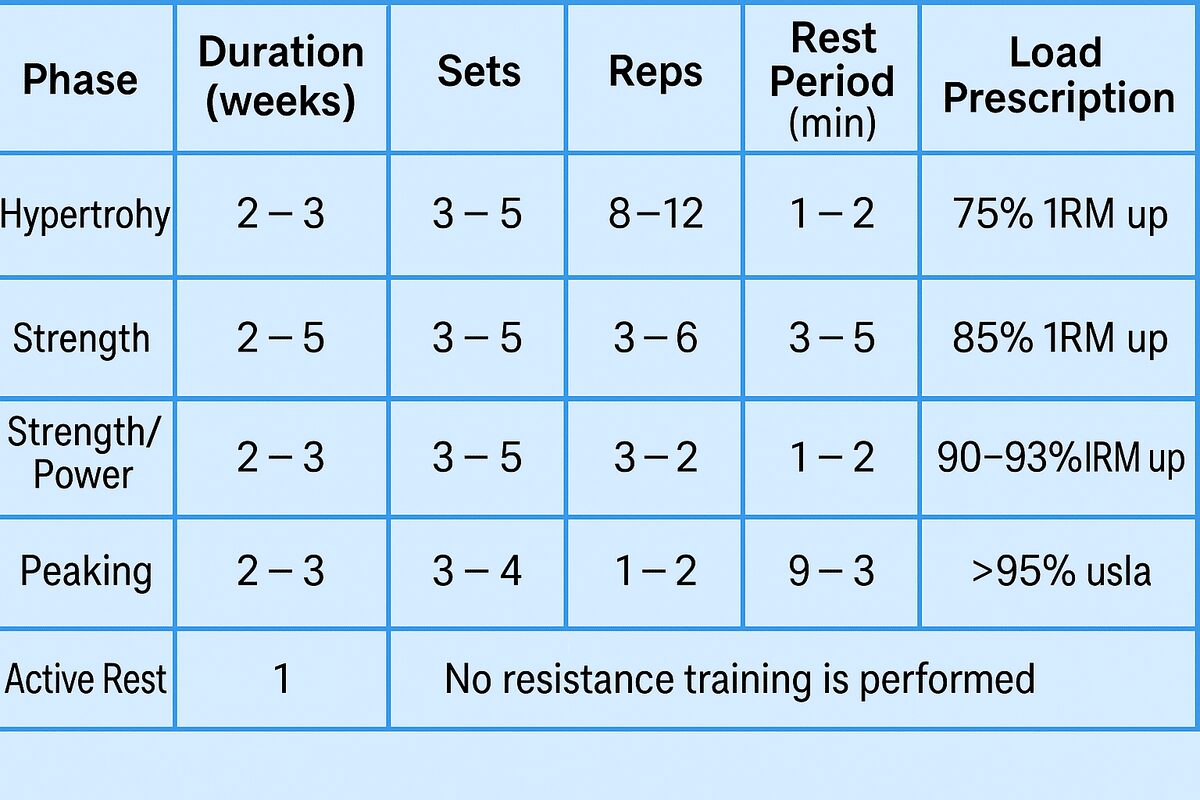
The 5 Phases of Periodization
① Hypertrophy Phase
→ Build a foundation to handle heavy loads
→ Low intensity, high volume
② Strength Phase
→ Develop maximum force
→ Medium intensity, medium volume
③ Strength/Power Phase
→ Boost speed and explosiveness
→ High intensity, low volume
④ Peaking Phase
→ Reach peak performance with minimal training
→ Maintain intensity, reduce fatigue
⑤ Active Rest Phase
→ Mentally and physically recharge
→ Light movement, no hard training
Benefits of Periodization
-
Prevents training boredom and stagnation
-
Allows targeted improvements in specific capacities
-
Helps you peak for key competitions
Summary
To peak at the most important event of the year, you need a plan.
That’s what periodization is all about.
As a new season begins, why not create your own yearly training plan?
Coming Up Next:
In the next post, I’ll break down the key physical attributes needed in wrestling. Stay tuned!
📘 “Dissecting the Strength of Japanese Wrestling” will be available on Kindle in December 2025.
📱 Follow Wrestling Lab on social media:
-
X (formerly Twitter): @wrestlinglab_jp
-
Instagram: @wrestle_insight
For the latest updates, behind-the-scenes content, and sports science insights!
–– Sho Ito

The author of this blog has written a Japanese-language book that examines the hidden mechanisms of wrestling from both research and coaching perspectives. Kindle edition 1,250 yen, paperback 2,500 yen, also included with Kindle Unlimited.
View on Amazon (out September 23) →
Release updates are sent through our official LINE account. / See the book page


コメント