
A large-scale study published in GeroScience in 2025 set out to answer a question that athletes, coaches, and researchers rarely think to ask: does the sport you compete in affect how long you live?
Reference: Altulea, A., Rutten, M. G. S., Verdijk, L. B., & Demaria, M. (2025). Sport and longevity: an observational study of international athletes. GeroScience, 47(2), 1397–1409.
Drawing on data from 95,210 former elite athletes across 183 countries and 44 sports, the study analyzed how different athletic disciplines relate to lifespan — and the results are more nuanced than the conventional wisdom that “exercise is always good for you.”
A note on the data: Women represented only 4.5% of the sample. In many sports — including wrestling — female athlete data fell below the 100-participant threshold required for analysis and were therefore excluded. The findings presented here reflect male athletes. Research into female wrestlers’ longevity remains an important area for future study.
Does Exercise Always Extend Your Life?
The health benefits of physical activity are well established. But the relationship between exercise and longevity may not be as straightforward as it seems. Some research suggests that extreme high-intensity training can elevate cardiovascular risk — leading to the hypothesis that the exercise-longevity relationship follows an inverted U-shape: moderate activity extends life, while extreme exertion may do the opposite.
Do different sports produce different longevity outcomes? This study tackles that question directly.
Study Design
- Participants: 95,210 former international athletes from 183 countries across 44 sports
- Data sources: Wikidata and Wikipedia (publicly available records)
- Method: Each athlete’s age at death was compared with the average life expectancy of the general population of the same sex, country, and birth cohort. The resulting difference was expressed as age delta.
- Exclusions: Athletes with documented doping violations, those who died from accidents or homicide, and sports with fewer than 100 data points
After exclusions, the analysis included 90,931 male and 4,279 female athletes. Due to insufficient sample sizes, women were excluded from analysis in most sports.
Finding 1: Wrestlers Live About 0.5 Years Longer — But the Result Is Not Statistically Significant
The dataset included 1,983 male wrestlers. On average, they lived approximately 0.5 years longer than the general population.
However, this difference did not reach statistical significance (p = 0.07). In plain terms, this means we cannot confidently conclude that wrestling either extends or shortens life based on this data alone.
It is worth clarifying what “not statistically significant” means: it does not mean “no effect.” It means the data were insufficient to rule out chance as an explanation — the question remains open.
How does wrestling compare to other combat and contact sports?
| Sport | Age delta (years) |
|---|---|
| Sumo | -9.8 |
| Boxing | -0.6 |
| Wrestling | +0.5 (not significant) |
| Martial arts (judo, karate, etc.) | -2.5 |
Wrestling’s position is notably favorable relative to other combat sports. The striking figure is sumo’s -9.8 years, likely reflecting the extreme weight gain, high-calorie dietary practices, and associated metabolic burden inherent to the sport.
Finding 2: The Top Sports Have Something in Common — They’re “Mixed” Sports
The sports associated with the greatest longevity gains were:
| Sport | Age delta (years) |
|---|---|
| Pole vault | +8.4 |
| Gymnastics | +8.2 |
| Fencing | +6.6 |
| Target sports (archery, etc.) | +6.2 |
| Racket sports (tennis, badminton) | +5.7 |
What these sports share is a combination of aerobic and anaerobic demands — what the authors call “mixed-type” sports. This combination appears to confer broad physiological benefits: improved cardiorespiratory fitness, preserved muscle mass, enhanced neuromuscular function, and greater bone density. Together, these factors may contribute meaningfully to longevity.
Pole vault’s position at the top may seem counterintuitive. The authors suggest several possible explanations: elite pole vaulters typically require years of technical development, experience relatively little chronic contact-related injury compared to combat sports, and may disproportionately come from socioeconomically advantaged backgrounds with access to high-quality coaching and medical support. That said, the pole vault sample was only 240 athletes — caution is warranted in interpreting this finding.
Tennis deserves particular attention. Unlike most elite sports, tennis is genuinely accessible throughout life — it can be played recreationally well into old age. The authors suggest that the ability to continue physical activity after retirement, rather than athletic training itself, may be a key driver of longevity.
Why Didn’t Wrestling Show a Significant Effect?
Wrestling is, by any definition, a mixed-type sport — it demands both aerobic endurance and explosive anaerobic power. On paper, it should fit the profile of a longevity-enhancing sport. So why did it fall short of statistical significance?
1. Wrestling Is Difficult to Continue After Retirement
You can play tennis at 60. Competitive wrestling has a much shorter window, and there is no obvious recreational equivalent that preserves its physical demands. The health benefits of wrestling may be largely confined to the competitive years — and the evidence suggests that what matters most for longevity is sustained physical activity across a lifetime, not peak athletic performance in youth.
2. Chronic Weight Cutting Takes a Toll
Rapid weight cutting before competition is widespread in wrestling. The long-term physiological consequences — hormonal disruption, disordered eating behaviors, and metabolic stress — may counteract some of the cardiovascular and musculoskeletal benefits gained through training.
3. Data Characteristics and Geographic Bias
The dataset is drawn from Wikipedia and Wikidata, meaning it skews toward athletes prominent enough to have a documented online presence. These individuals may be unrepresentative of the broader wrestling population — they are likely to have had access to superior coaching, nutrition, and medical care. Additionally, 63.4% of the data came from just nine Western countries. Major wrestling nations such as Japan, Iran, and Russia are likely underrepresented, potentially skewing results in ways that are difficult to assess.
Key Takeaways
- Male wrestlers in this study lived approximately 0.5 years longer than the general population — a positive trend, but not statistically significant.
- Compared to other combat sports, wrestling’s longevity profile is relatively favorable; sumo and boxing show clear negative associations.
- The sports most strongly linked to longer life are mixed-type sports combining aerobic and anaerobic demands.
- Wrestling’s failure to reach significance may reflect the difficulty of sustaining wrestling-specific activity after retirement, the cumulative effects of weight cutting, and limitations in the dataset itself.
The broader implication of this research may be less about which sport you compete in, and more about what you do with your body after you stop competing. The evidence suggests that the habits athletes carry into retirement — whether they stay active, in what form, and at what intensity — may matter as much as the sport itself.
For wrestlers and coaches, this points to a practical question worth taking seriously: what does the transition out of competitive sport look like, and how can athletes build physical habits that serve them for decades after the final match?
Reference: Altulea, A., Rutten, M. G. S., Verdijk, L. B., & Demaria, M. (2025). Sport and longevity: an observational study of international athletes. GeroScience, 47(2), 1397–1409.
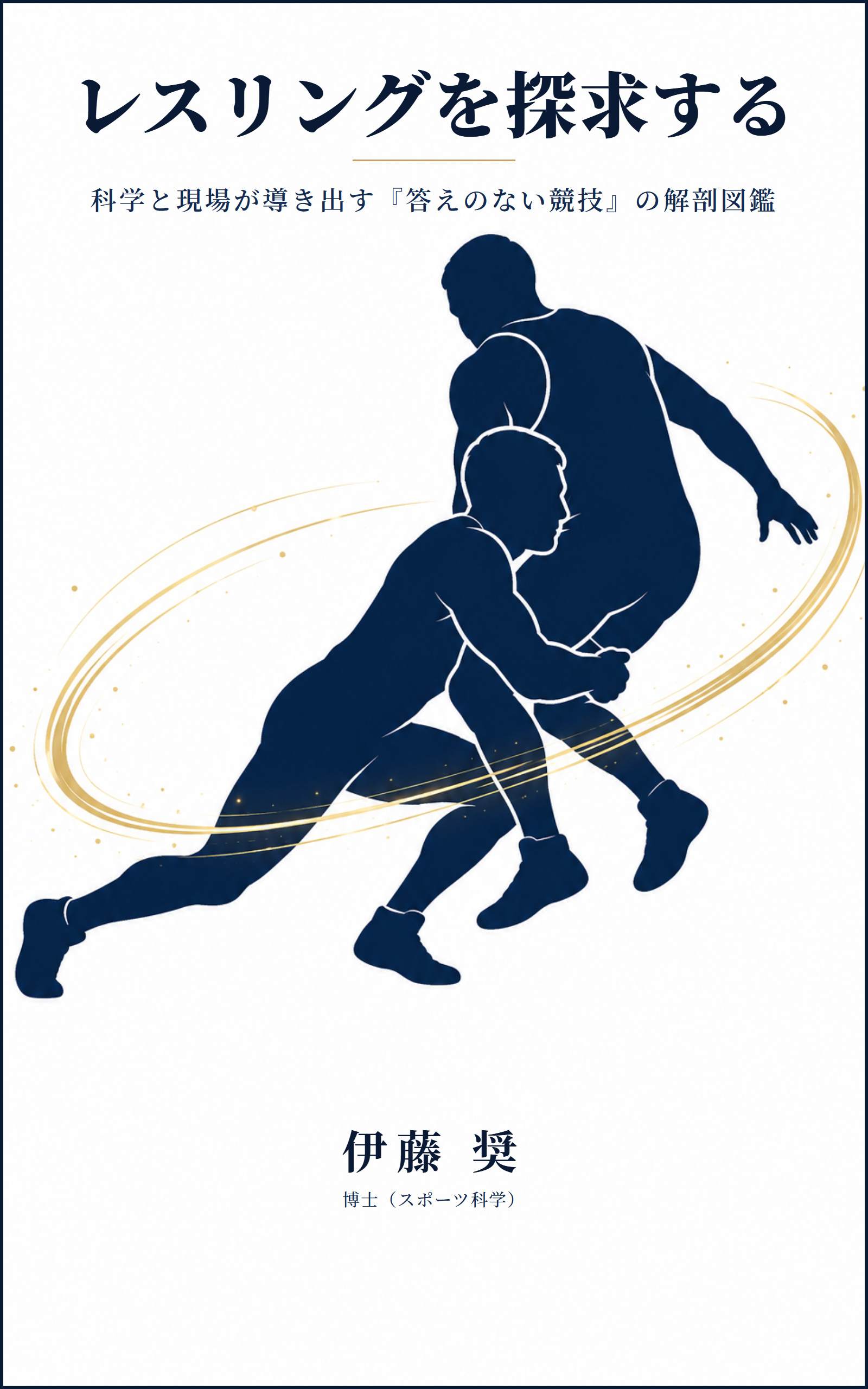
The author of this blog has written a Japanese-language book that examines the hidden mechanisms of wrestling from both research and coaching perspectives. Kindle edition 1,250 yen, paperback 2,500 yen, also included with Kindle Unlimited.
View on Amazon (out September 23) →
Release updates are sent through our official LINE account. / See the book page


コメント