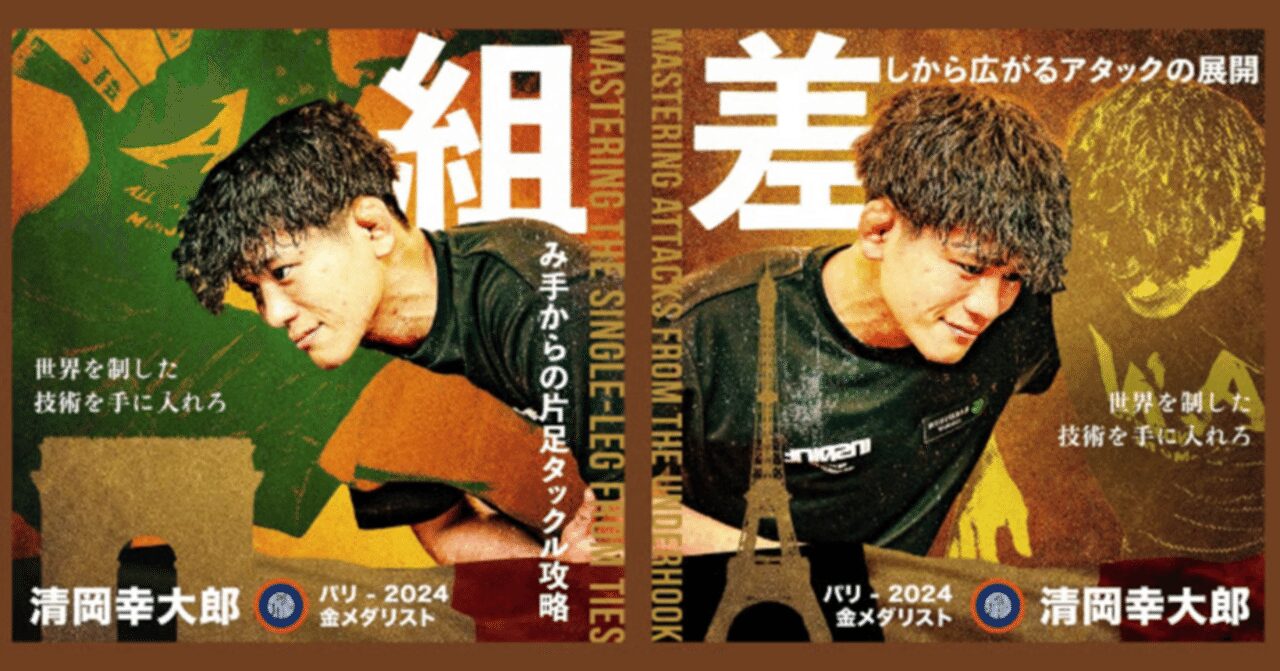
Recently, I purchased a new instructional video released on Wrestling Platform, a collaboration between Shingo Arimoto and Kotaro Kiyooka, and it left a strong impression on me.
🎥 Official Link (Wrestling Platform)
Title: [Two-part set] Kotaro Kiyooka – Attack development from inside position & Single-leg attack from grip fighting
Price: ¥15,980 JPY
While there have been many instructional videos about wrestling techniques, this one stands out for a simple reason:
it doesn’t just explain the tackle itself — it focuses on what happens before it, the pathway leading to the attack, emphasizing grip fighting and kuzushi (breaking balance).
- 1. Wrestling Is About Using the Opponent’s Reaction
- 2. The Importance of Grip Fighting and Kuzushi
- 3. Why Grip Fighting Is So Hard to Teach
- 4. Why This Instructional Video Stands Out
- 5. The Science Behind “Using Reaction and Resistance”
- 6. How to Learn the Skill of “Using Reaction”
- 7. Conclusion — Grip Fighting as Reflex Intelligence
1. Wrestling Is About Using the Opponent’s Reaction
One line from Kiyooka struck me the most:
“Wrestling is a sport where you use your opponent’s reaction and resistance.”
At first glance, this might sound intuitive, but the more I thought about it, the more I realized how deep it is.
This idea captures not only the tactical but also the neurophysiological essence of wrestling.
In this article, I’d like to explore that idea — both as a researcher and as someone who’s been on the mat.
2. The Importance of Grip Fighting and Kuzushi
In my research on the success factors of leg attacks in wrestling, one consistent pattern emerged:
the presence or absence of kuzushi and grip fighting strongly correlates with tackle success.
In other words, a successful tackle is not determined solely by speed or strength.
It depends on how effectively you can unbalance your opponent, provoke a reaction, and use that reaction.
Wrestling may look like a pure contest of power, but it is, in reality, a sport of sensing and redirecting force —
feeling the direction of your opponent’s energy and adapting your own.
3. Why Grip Fighting Is So Hard to Teach
Grip fighting and kuzushi have long been regarded as “difficult-to-teach” skills.
The reason is simple: there is no universal form.
Each athlete’s optimal grip depends on body type, arm length, preferred techniques, and stance.
What works perfectly for one wrestler may not suit another at all.
Therefore, most instructionals have focused on correct shapes — the right hand placement or stance —
while leaving the feel of grip fighting vague and intuitive.
This is precisely why the Arimoto × Kiyooka video feels groundbreaking.
4. Why This Instructional Video Stands Out
Unlike typical technical guides that stop at form, this video verbalizes the invisible —
the timing, pressure, and interaction that connect grip fighting to the attack.
It doesn’t just show the “correct tackle form.”
It explains how to move the opponent, when to apply pressure, and how to elicit a specific reaction.
It provides a structural model of the pathway leading to the attack.
Kiyooka’s grip fighting looks simple, but beneath it lies a consistent principle: use, don’t oppose, your opponent’s power.
He doesn’t push by force — he provokes a subtle counterforce, reads its direction, and converts it into motion.
It’s an elegant exchange — like transferring energy in physics — that demands remarkable sensory precision.
5. The Science Behind “Using Reaction and Resistance”
Kiyooka’s statement also makes perfect sense from a neurophysiological perspective.
Our muscles exhibit what’s called the stretch reflex —
an automatic contraction that occurs when a muscle is suddenly stretched, helping maintain posture and stability.
However, elite wrestlers often show the ability to suppress or modulate this reflex.
In my previous study on upper-limb muscle activity (Ito et al., 2021), wrestlers displayed a tendency to inhibit triceps stretch reflexes under certain conditions.
In other words, rather than reacting automatically to external forces,
they sense the direction of their opponent’s output and adapt intentionally —
turning passive reactions into active control.
This fine-tuned neural control may explain the “softness” and “flow” of Kiyooka’s grip fighting.
It represents a form of reflex intelligence — the ability to use feedback dynamically rather than resist it.
6. How to Learn the Skill of “Using Reaction”
To get the most out of this video, I suggest focusing less on form and more on principle.
Kiyooka’s movement isn’t about how to break balance — it’s about predicting how the opponent will move.
So instead of trying to copy everything exactly, pay attention to whether your opponent reacts as you intended.
Wrestling is an open-skill sport, where no two situations are ever the same.
Each wrestler must construct their own pathway toward their preferred techniques.
Start by internalizing Kiyooka’s key principles:
-
The direction of pressure
-
The shift of center of gravity
-
The use of opponent’s reaction as feedback
Then adapt these to your own physique and style.
This approach resonates with the Japanese martial arts concept of Shu–Ha–Ri —
-
Shu (守): Learn by imitation
-
Ha (破): Adapt and refine
-
Ri (離): Create your own expression
Applying Shu–Ha–Ri through this instructional series can elevate your wrestling from imitation to individuality.
7. Conclusion — Grip Fighting as Reflex Intelligence
“Wrestling is a sport where you use your opponent’s reaction and resistance.”
In this single line, Kiyooka captures the intellectual architecture of wrestling.
It’s not a sport of collision, but of perception — sensing the opponent’s output and using it effectively.
From both scientific and practical perspectives, grip fighting is not a skill of strength, but a skill of perception —
a moment where sensory and motor systems unite in perfect coordination.
The Arimoto × Kiyooka instructional is, in my view, one of the best tools to learn this essence.
Through it, you can experience wrestling not just as a contest of strength, but as a discipline of adaptive intelligence:
not forcing your opponent to move, but using their reaction to create your own rhythm.
📘 References
-
Wrestling Platform (2025). [Two-part set] Kotaro Kiyooka – Attack development from inside position & Single-leg attack from grip fighting.
https://wrestlingplatform.stores.jp/items/68bbac68248f8c4aab166352 -
Ito, S., Crawshaw, L., & Kanosue, K. (2019). Differences between male and female elite freestyle wrestlers in the effects of “set-up” on leg attack. Archives of Budo, 15.
-
Ito, S., et al. (2021). Dynamic control of upper limb stretch reflex in wrestlers. Medicine and Science in Sports and Exercise, 54(2), 313.
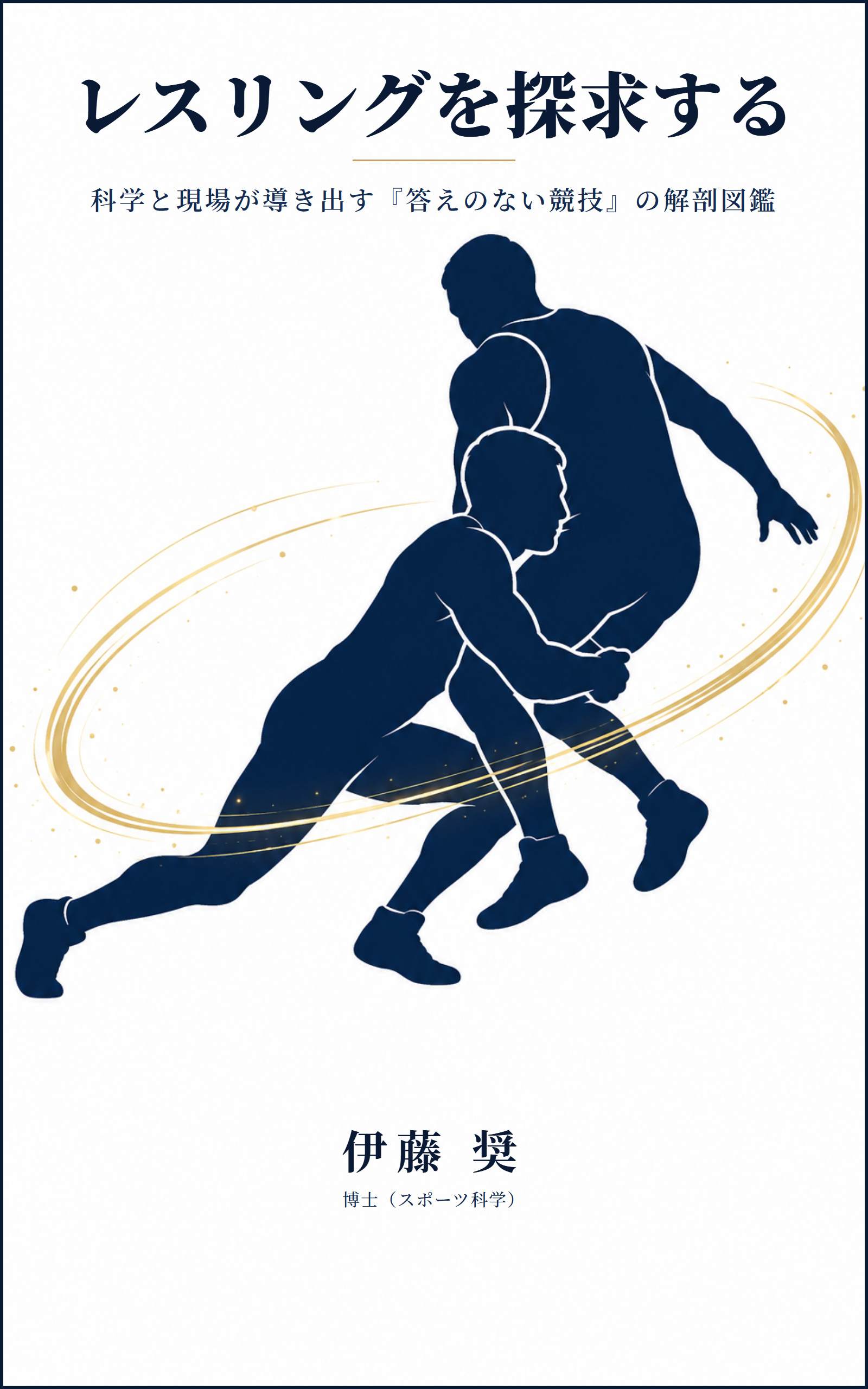
The author of this blog has written a Japanese-language book that examines the hidden mechanisms of wrestling from both research and coaching perspectives. Kindle edition 1,250 yen, paperback 2,500 yen, also included with Kindle Unlimited.
View on Amazon (out September 23) →
Release updates are sent through our official LINE account. / See the book page

コメント