Hello,
I’m Sho Ito, the creator of Wrestling Lab.
I’m currently writing a book titled “Dissecting the Strength of Japanese Wrestling,” which is scheduled for release on Kindle in December 2025.
Through this note, I share insights about wrestling from a scientific perspective, along with behind-the-scenes updates on the book’s development.
About Me
I started wrestling at the age of four. I’ve spent 20 years as a competitor and another 5 as a coach. Throughout this journey, I’ve experienced joy, frustration, defeat, and meaningful encounters with mentors. Now, looking back from outside the competitive scene, I’d like to share the lessons wrestling has taught me.
1. The Importance of Self-Discipline
Wrestling is a weight-class sport. Before you even face your opponent, you must overcome the challenge of “weight cutting.” Managing your weight is an act of self-management. Every lifestyle choice you make impacts your performance.
When cutting weight, your immune system weakens, and even catching a cold can be a major setback. In such times, you can’t afford to give in to temptation.
This daily battle cultivated my sense of self-discipline—something that continues to benefit me.
For example, in graduate school, I had to plan and carry out my own research rather than just attend lectures. With fewer scheduled classes, managing time became even more important. I was always the first to arrive at the lab, dedicating time to research. Thanks to the guidance of my advisor and seniors, I published a first-author paper during my master’s studies and earned a full scholarship exemption.
This is just one example of how the mindset built through wrestling continues to shape my life.
2. The Importance of Thinking
You can’t succeed in wrestling by “just doing it.” Every athlete has a different body type, strength, and range of motion.
In a world with no one-size-fits-all solution, you have to reflect on what you’re taught, process it, and adapt it to suit your own strengths.
This ability to “think through” what works best is what fuels real progress. It’s the essence of the Japanese concept Shu-Ha-Ri—learning the form, breaking the form, and leaving the form behind.
3. There’s Always Someone Better — The Value of Effort
As a child, I won a national championship in elementary school, placed second in middle and high school, and finished third in college. My results declined as the level of competition rose.
In college, I was surrounded by top athletes. In my weight class were future Olympic champions like Rei Higuchi and Kenichiro Fumita. I faced both in matches—and lost.
Seeing their talent and work ethic made me realize that if I wanted to grow, I had no choice but to think deeply and train consistently.
Of course, aiming for the top is important. But in any field, only one person can be number one. The real path to growth is knowing where you stand and striving to outdo your past self each day.
4. The Importance of Coaches and Mentors
As an athlete, I was fortunate to receive support from many incredible coaches. After retiring, I became a coach myself.
Through both experiences, I realized just how influential a coach can be. Coaches and athletes won’t always see eye to eye, but it’s the coach’s job to work through those differences and help the athlete reach their goals.
This applies outside sports, too. Great managers in the workplace are not just top performers—they’re also great “coaches.”
Like in wrestling, coaching has no single correct answer. That’s what makes it so challenging—and so rewarding.
5. What You Realize After Leaving Competition
Only after stepping away from the mat did I truly understand how much wrestling shaped me.
The stress before matches, the pressure to perform, the mental strain of cutting weight—wrestling puts you through it all.
But those experiences helped me develop emotional strength. I learned to take full responsibility for wins and losses, without excuses.
That’s why I now face life’s challenges with a greater sense of calm, confidence, and resilience.
In Closing
I may have stepped away from the mat, but the lessons I learned through wrestling remain alive in me today.
To those just starting wrestling:
Wrestling is a tough sport. There will be more hard times than fun ones. But through it, you’ll learn so much—and those lessons will enrich your life.
To those currently wrestling:
What has wrestling taught you? Take a moment to reflect.
Someday in a job interview, someone will likely ask: “What did you learn through wrestling?”
By thinking deeply about this, you may come to view wrestling in a new light.
To those who’ve retired from wrestling:
Have you ever thought, “That lesson actually came from wrestling”?
We all carry different lessons from the sport. I’d love to hear yours.
Feel free to share in the comments or message me!
📘 Dissecting the Strength of Japanese Wrestling will be available on Kindle in December 2025.
📱 Stay connected through social media:
-
X (formerly Twitter): @wrestlinglab_jp
-
Instagram: @wrestlinglab_jp
I also post updates on the book, behind-the-scenes stories, and wrestling-related research.
── Sho Ito
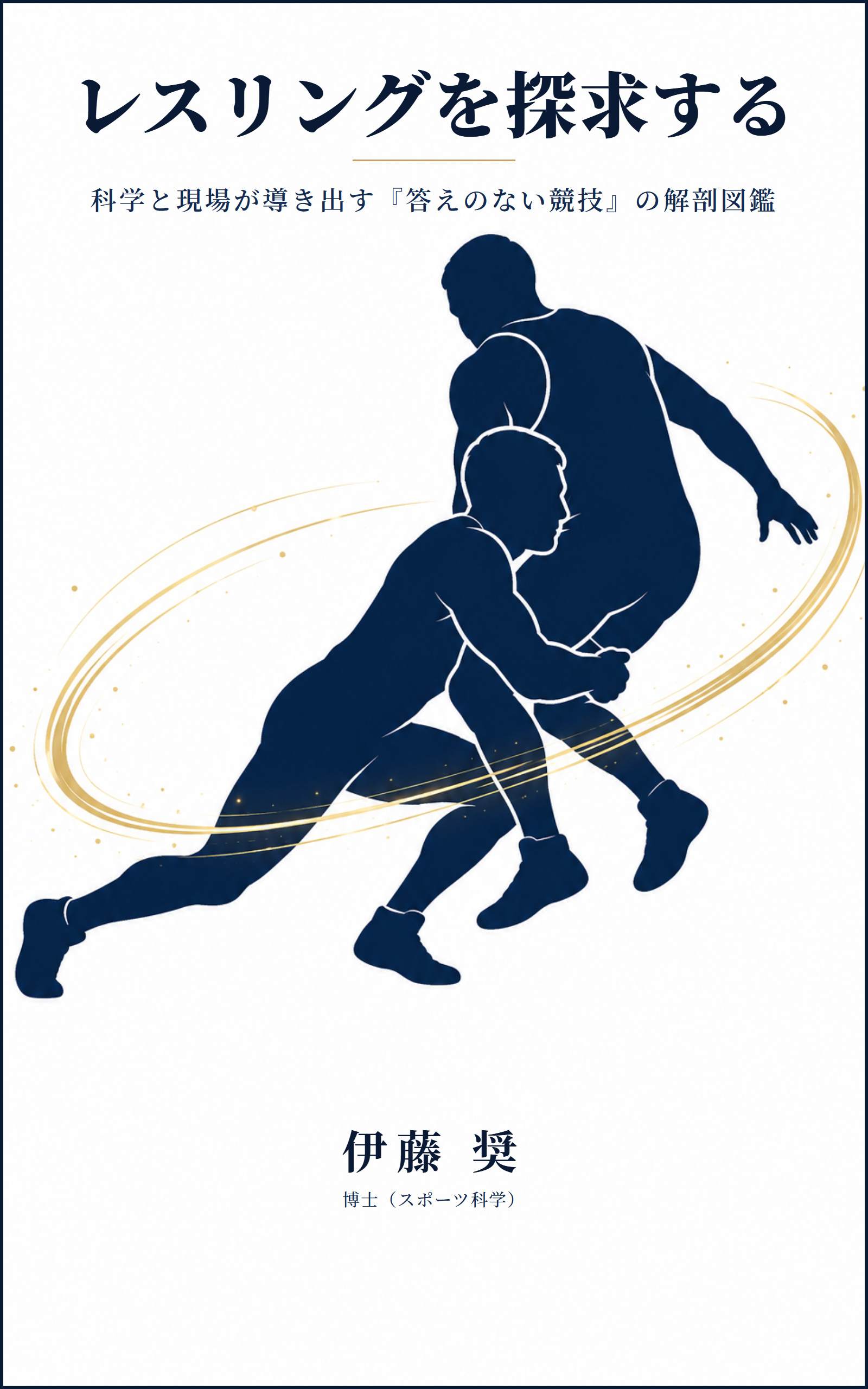
The author of this blog has written a Japanese-language book that examines the hidden mechanisms of wrestling from both research and coaching perspectives. Kindle edition 1,250 yen, paperback 2,500 yen, also included with Kindle Unlimited.
View on Amazon (out September 23) →
Release updates are sent through our official LINE account. / See the book page


コメント