Introduction: Why do similar takedowns produce different results?
When you watch wrestling, you sometimes see two athletes attempting seemingly similar takedowns—one succeeds smoothly, while the other is easily defended.
Is it just differences in speed or strength?
The hidden factor often lies in a skill called “kuzushi.”
Kuzushi is not a flashy move. Yet, it is a subtle element that can greatly influence the outcome of a match. In this article, I will introduce the basic concept of this often “invisible” technique.
▶ Watch the video version (about 7 min):
What is “Kuzushi”?
Kuzushi refers to the act of disrupting an opponent’s balance, posture, and mental anticipation in order to create an opening for attack.
Examples include:
Pushing or pulling
Forcing the opponent’s head down
Using feints
In short, kuzushi means breaking the opponent’s most stable defensive position—disrupting their posture and anticipation.
Why is kuzushi difficult to master?
Kuzushi is not only difficult to understand but also challenging to teach.
One reason lies in the diversity of wrestling styles.
Some athletes excel at inside control, breaking balance from close contact.
Others rely on quick footwork or feints, disrupting from a distance.
The effectiveness of kuzushi also depends on the opponent’s favored techniques and body type.
This means there is no single “correct” form. Each wrestler must develop their own version of kuzushi.
What the data shows about kuzushi
In my own analysis of senior elite wrestlers, I found that takedowns preceded by kuzushi were significantly more successful than those attempted without it (Ito et al., 2019).
In other words, takedowns with kuzushi were more likely to succeed compared to those launched directly.
This suggests that, even when strength and speed are roughly equal, whether or not kuzushi is applied can make a decisive difference.
The higher the competitive level, the more crucial kuzushi becomes.
(Details of the dataset and methodology will be explained in my forthcoming book.)
A practical perspective
As a coach, I often feel that kuzushi is “hard to explain in words.”
When I simply tell athletes, “Break his balance!” they often cannot picture what to do. So instead, I use phrases like:
“Disrupt your opponent’s posture and force a reaction.”
“Break the rhythm or tempo of the attack.”
Even small successes—forcing one step, or drawing a defensive reaction—are valuable experiences. These incremental steps form the foundation for mastering kuzushi.
Conclusion: Invisible, yet essential
Kuzushi is often invisible to the audience and even hard for athletes themselves to consciously recognize.
Yet behind almost every successful takedown or throw, there is a well-executed kuzushi.
From a research perspective, evidence suggests that kuzushi significantly influences attack success rates.
From a coaching perspective, how we teach and internalize kuzushi is a key factor in athlete development.
This article has served as an introductory piece, sharing both the concept and a glimpse of research findings.
The broader context and training applications will be discussed in detail in my upcoming book.
What about you—before attempting a takedown, what do you do to move your opponent?
Feel free to share your thoughts in the comments!
📌 Closing note
Kuzushi is an essential element that gets to the very heart of wrestling, yet much remains to be clarified through both research and practice.
I hope you’ll continue to follow along as I share more insights.
📘 Dissecting the Strength of Japanese Wrestling will be published on Kindle in December 2025.
📱 Follow me for more updates:
X (Twitter) → @wrestlinglab_jp
Instagram → @wrestle_insight
I also share updates on new note articles, behind-the-scenes progress, and relevant wrestling research.
Reference
Ito, S., Crawshaw, L., & Kanosue, K. (2019). Differences between male and female elite free-style wrestlers in the effects of “set up” on leg attack. Archives of Budo, 15.
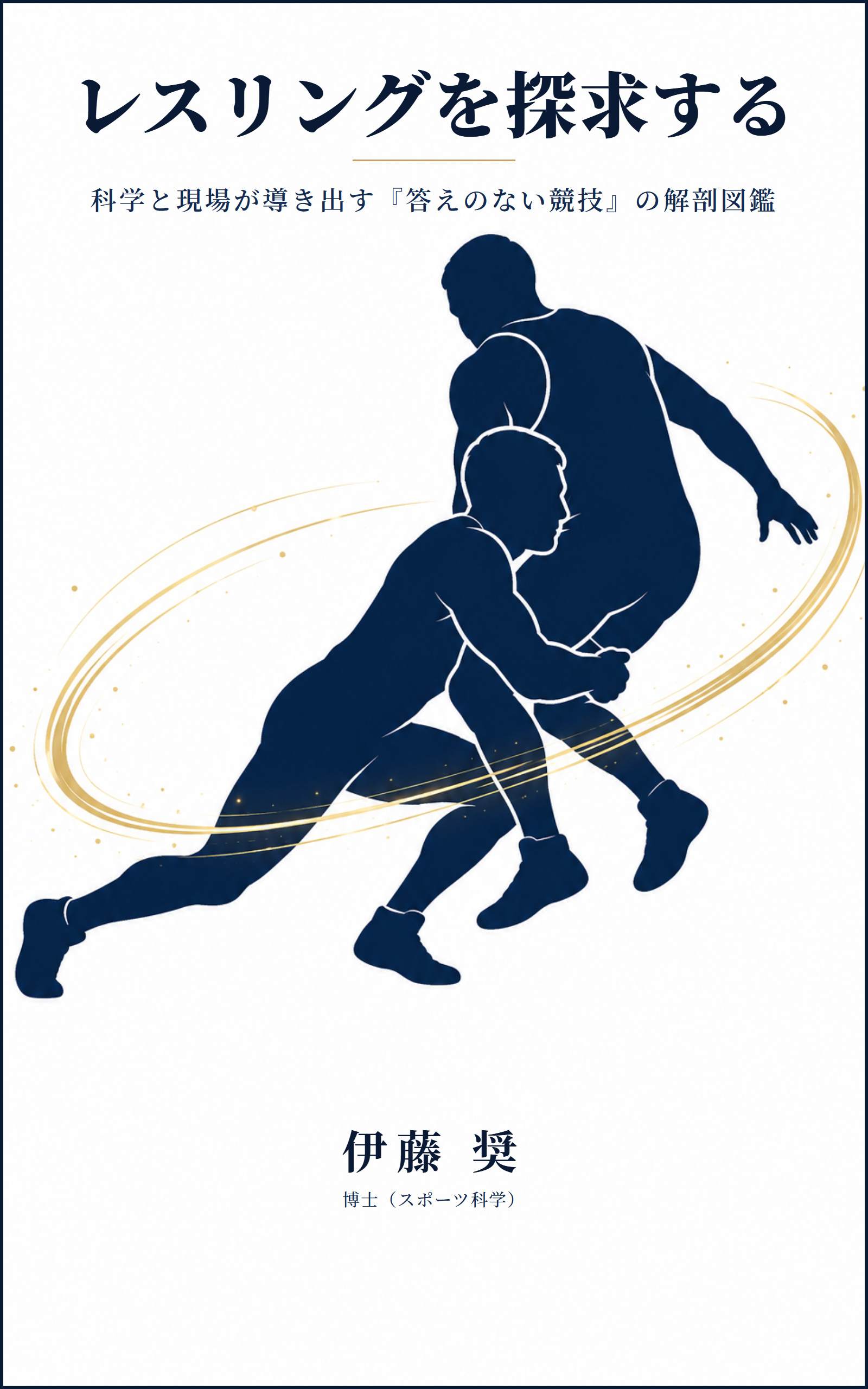
The author of this blog has written a Japanese-language book that examines the hidden mechanisms of wrestling from both research and coaching perspectives. Kindle edition 1,250 yen, paperback 2,500 yen, also included with Kindle Unlimited.
View on Amazon (out September 23) →
Release updates are sent through our official LINE account. / See the book page


コメント