- Introduction
- Points Per Minute — The Measure of Offensive Power
- Points Allowed Per Minute — The Measure of Defensive Solidity
- Competition Points Won (CPW) — Quality of Victory
- Competition Points Lost (CPL) — Leaving No Opening
- Wrestling Quality (WQ) — Offensive and Defensive Balance
- Most Successful Wrestler (MSV) — The Complete Champion
- What the Data Tells Us About Strength
- Closing Thoughts
Introduction
The final chapter of the 2025 Tenno Cup series is freestyle. We collected match data for every weight class champion and analyzed each using the same six performance metrics applied to our World Championships coverage. Rather than simply recording wins and losses, this analysis explores the quality of strength that the numbers reveal.
Points Per Minute — The Measure of Offensive Power
The first metric is Points Per Minute (PPM), which measures how efficiently a wrestler scored relative to total mat time. The top performer was Arashi Yoshida (97kg), who posted a remarkable 6.60 points per minute — a figure that reflects not just a high scoring volume, but an explosive ability to close out matches in a short period of time. It is worth noting that due to bracket circumstances and opponent withdrawals, Yoshida competed in only two matches at this tournament. Even so, his scoring rate is extraordinary.
Second place went to Yamamoto (125kg), another heavyweight whose tackle speed was nothing short of stunning for his weight class. Third place went to Hasegawa (61kg), who despite competing in the tightly contested lightweight division, continuously created scoring opportunities through aggressive attacks. In addition to takedowns, his ability to score on the ground stood out.
Points Allowed Per Minute — The Measure of Defensive Solidity
Next, we look at Points Allowed Per Minute, a defensive metric that captures how well each champion prevented their opponents from scoring. Yoshida and Yamamoto both finished the tournament without conceding a single point — a testament to their disciplined risk management even while wrestling aggressively. Takatani (86kg) held his opponents to just 0.15 points per minute, demonstrating elite-level defense.
Competition Points Won (CPW) — Quality of Victory
In wrestling, points are awarded based on how a match is won: a fall earns 5 points, a technical superiority earns 4, and a decision earns 3. Averaging these across matches gives us Competition Points Won per match (CPW). Hasegawa led this ranking, with Yoshida in second and Narikuni (70kg) — who also won the Greco-Roman title — in third. These wrestlers did not merely win; they won convincingly.
Competition Points Lost (CPL) — Leaving No Opening
This metric averages the competition points conceded to opponents. Yoshida and Yamamoto once again recorded a perfect 0, giving their opponents absolutely no foothold throughout the tournament. It also means neither wrestler conceded points from activity violations or out-of-bounds calls.
Wrestling Quality (WQ) — Offensive and Defensive Balance
Wrestling Quality (WQ) is calculated as Points Scored per Minute minus Points Allowed per Minute, capturing the overall balance between a wrestler’s offense and defense. Yoshida again topped this ranking. When you look at both sides of the ledger together, the wrestlers who truly stand out are those who dominate on both ends — and by that measure, Yoshida is in a class of his own. Yamamoto finished second and Hasegawa third.
Most Successful Wrestler (MSV) — The Complete Champion
The final metric is the Most Successful Wrestler index (MSV), a composite measure that adds the competition point differential (CP margin) to WQ, combining both performance balance and quality of victory into a single score. Yoshida claimed the top spot here as well, providing numerical confirmation that he was the most complete champion of this tournament — a distinction that held across every single ranking.
What the Data Tells Us About Strength
The standout story of this tournament was unmistakably Yoshida’s dominance. Even with a limited number of matches, the consistency and quality of his performances were exceptional. The gap between the champion and the rest of the field was substantial.
Closing Thoughts
Japanese wrestling has been asserting itself as a global force in recent years, and this tournament reflected that continued upward trajectory. The 74kg division featured a matchup between two world champions, producing an exceptionally high-level contest. In the 65kg division, Paris Olympic champion Kiyooka claimed the title. As we continue to track and record data across tournaments, new patterns and angles of analysis will inevitably emerge. Stay tuned for more to come.
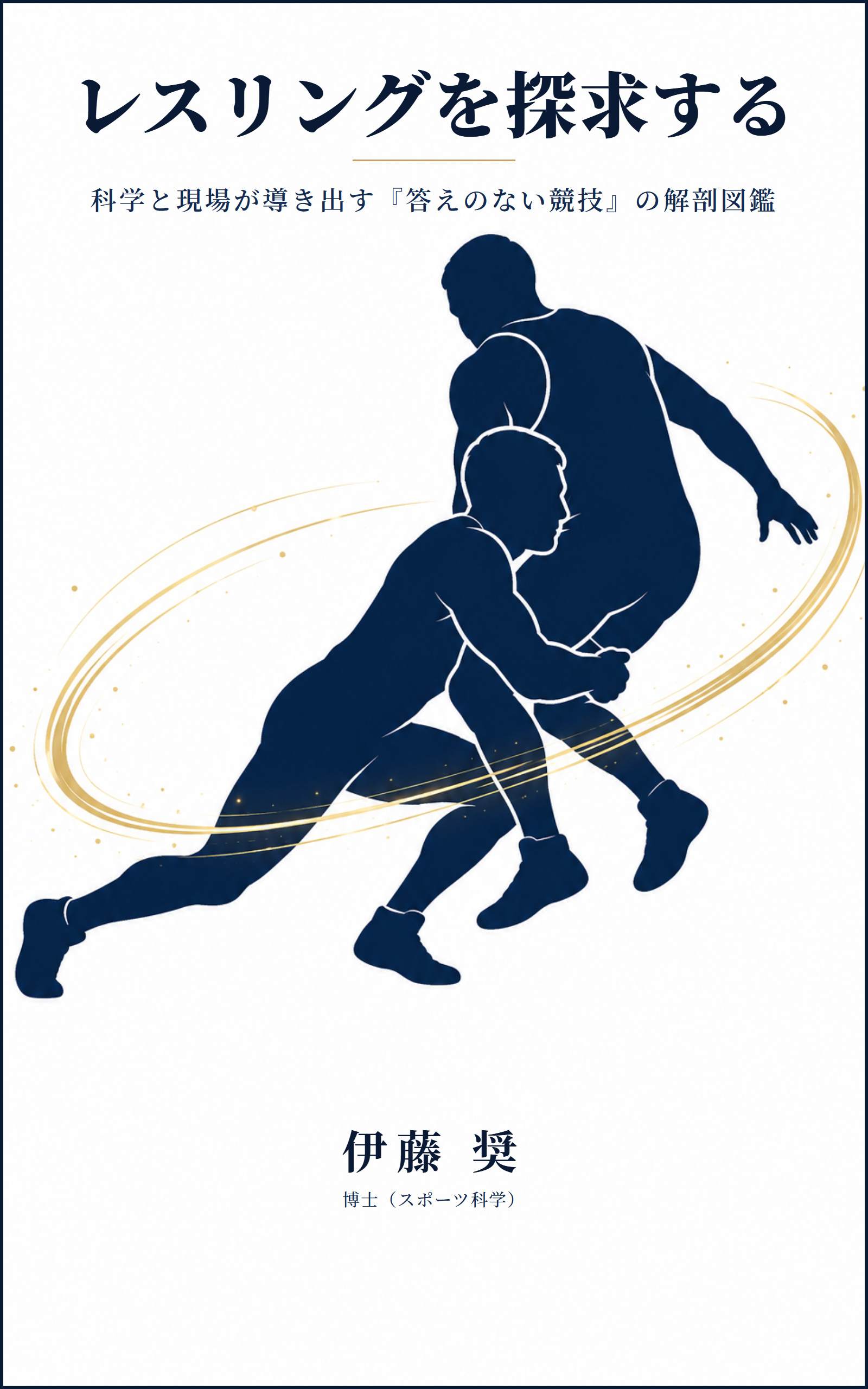
The author of this blog has written a Japanese-language book that examines the hidden mechanisms of wrestling from both research and coaching perspectives. Kindle edition 1,250 yen, paperback 2,500 yen, also included with Kindle Unlimited.
View on Amazon (out September 23) →
Release updates are sent through our official LINE account. / See the book page


コメント