🌏 日本語版はこちら:レスリングは「最高のメディテーション」だった ― 現役選手が語る、終わった後の“整い”がすごい理由
“Skip the Sauna. You’re Better Off Wrestling.”
Of all sports, wrestling tends to look plain from the outside. Yet a current top-level competitor described it with words I did not expect.
In June of this year, I sat down online with Ryoma Anraku, a top active grappler and former wrestler. This is the second episode of our conversation, following Episode 1 on kuzushi. At the time, I was preparing my book Exploring Wrestling (published in September), which reads the sport through both science and the lived experience of the mat, and at some point our conversation turned to a simple question: what is the single most interesting thing about this sport?
Anraku put it this way:
“Wrestling is probably the best form of meditation there is. The reset you feel afterward is unreal. Forget the sauna. You’re far better off wrestling.”
Some context for readers outside Japan: sauna culture has boomed here in recent years, built around the idea of totonou, the deeply settled, reset state of mind and body you reach after a few rounds of heat and cold water. That reset is exactly what Anraku is pointing to. And he ranks wrestling above the sauna.
He wasn’t joking. This is the honest conclusion of someone who has spent his whole career inside his own moving body.
This article is not only for people who wrestle. If anything, it’s for office workers and executives who spend their days at a desk, slowly wearing themselves down.
Locked Onto One Thing: The Opponent in Front of You
Why would a grappling sport work as the best meditation? Anraku currently teaches wrestling to working adults as well, and this is what he tells them:
“You have to lock onto the person in front of you, completely. If you’re thinking about work, honestly, don’t bother wrestling. That’s the end of it. Wrestling is the sport where you get to pour yourself into the opponent right in front of you.”
If you don’t focus on the person in front of you, you’re the one who gets taken down. So there is no room for stray thoughts. Work worries, everything looming ahead, the thoughts that normally circle in your head simply fade away on the mat.
“No matter how rough things are, the moment I’m wrestling, I can forget all of it. My body, my brain, they flip the switch on their own. Focus just snaps into place.”
Meditation and mindfulness practice train you to stay in the present moment. Anyone who has tried knows how hard it is to quiet the mind. Wrestling solves the problem from the opposite direction: it puts you in a situation where total focus is not optional, so you arrive in the present moment naturally.
And your body is working hard the whole time. Mind fully used, body pushed to its limit, and what remains afterward is the feeling of having given everything. A cleared head and a tired body, arriving at the same time. That, I think, is the real identity of the reset Anraku describes.
The Smartphone’s “Junk Dopamine”
One more part of the conversation stayed with me: what Anraku sees when he looks at people working in today’s world.
“Everyone’s walking around with this dead-fish look on their face, right? Look around and it’s all heads down (he mimes staring at a phone). After I noticed that, I started making a point of looking at the scenery. Head up.”
“(Phones) give you dopamine, sure. But it’s dopamine you don’t need.”
A phone delivers stimulation, no question. But in Anraku’s words, it is junk dopamine, stimulation you don’t need. A full day facing a computer, every spare minute spent on a phone. Bathing in information, yet somehow the head never clears. Most of us know that feeling.
Anraku’s habit of lifting his head and looking at the world is one way out of that current. And pouring your whole body and mind into the single opponent in front of you, which is what wrestling and grappling demand, is the most thorough form of it.
Wrestling Is Not a Clash of Raw Force
Here, one big misunderstanding needs clearing up.
Most people picture wrestling as a collision of strength and speed. Some time ago I posted on social media that wrestling is not a simple speed contest, that the hand-fighting is a deeply logical game of moves and counter-moves. The post spread widely, which tells you how little known this is. When I raised it in our conversation, Anraku answered instantly: “Nobody knows that.”
You read your opponent’s reactions, break their rhythm, deliberately show an opening to draw them in. It is not a sport of overpowering someone. It is a sport you assemble with your head. The skill of making an opponent commit an error, which Anraku described in Episode 1, is exactly this part.
That is why grappling becomes meditation for people who think. You are not just sweating. You are reading, judging, deciding, at full intensity. That density of focus is what produces the deep reset afterward.
For Executives, and for People Who Have Studied Seriously
Near the end of our conversation, I asked Anraku what kind of person he would want to read the book I was preparing at the time. The answer came straight back:
“Executives. Seriously. That way of seeing things is an executive’s. They love logic.”
“People from technical backgrounds, people who have really studied, the seriously diligent types. They should read it.”
His view is that the more a person builds things out of logic, the more they will appreciate the logical side of grappling. He then described what it means to step into a completely different world:
“When you go into a different field, you become flat. Seriously. And everything feels new again.”
The more responsibility you carry, and the more your work runs on logic, the more a completely different field can give you a fresh sense of things. People who work with their heads need time with the head switched off. Grappling is one of those switches. Not a sauna, not a jog, but another route to the same reset.
Anraku also wrote an endorsement for the book: “It is a book that lets you dig deep into what kind of sport wrestling really is. People often say, vaguely, that it looks exhausting. Here you understand concretely what is exhausting about it, and your image of wrestling changes.” Hearing that from an active competitor was a real confirmation for me, after the years I had spent writing the book.
Takeaways
What this conversation brought into focus:
- Wrestling and grappling let you pour everything into the single opponent in front of you: the best meditation there is. The reset afterward beats the sauna.
- Daily life wears us down with junk dopamine, heads angled at our phones. Make time to lift your head and lock onto one thing.
- Wrestling is not a clash of strength and speed. It is a logical game of moves and counter-moves, which is why it works as meditation for thinkers.
- The more your work runs on logic, the more stepping into a different field restores a flat, fresh state of mind.
You do not have to empty your head to reach the reset. Pouring yourself completely into the one thing in front of you is, in itself, a modern form of totonou.
Whether you compete, coach, spend too many hours at a desk, or simply enjoy thinking things through, I hope this conversation offers a hint for resetting your own head and body.
🔗 Ryoma Anraku Interview Series (2 Episodes)
Our conversation with active grappler Ryoma Anraku is published in two parts.
- Episode 1, Kuzushi: The Art of Making Your Opponent Fail
- Episode 2, Meditation: Why Wrestling Is the Ultimate Meditation (this article)
About Wrestle InSight
Wrestle InSight is a media outlet that examines wrestling through three combined perspectives: former wrestler, coach, and researcher. It is run by Sho Ito, PhD in Sport Science, who moves across two kinds of knowledge, the practical knowledge built on the mat and the scientific knowledge built in the university. The goal is to add one step of depth to information that too often passes by as just a vague impression.
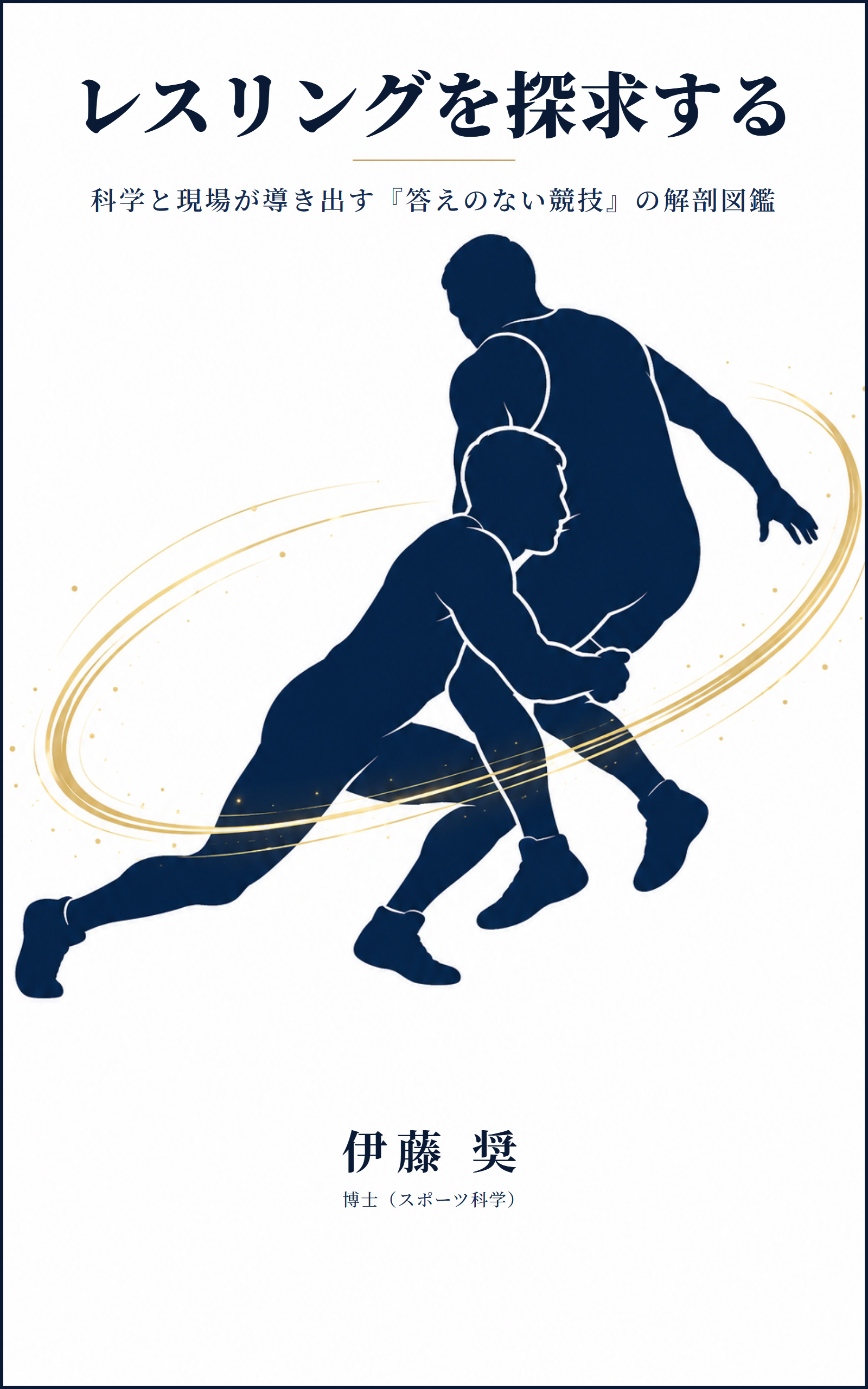
The author of this blog has written a Japanese-language book that examines the hidden mechanisms of wrestling from both research and coaching perspectives. Kindle edition 1,250 yen, paperback 2,500 yen, also included with Kindle Unlimited.
Paperback (2,500 yen) →Kindle (1,250 yen) →
Updates are sent through our official LINE account. / See the book page
コメント